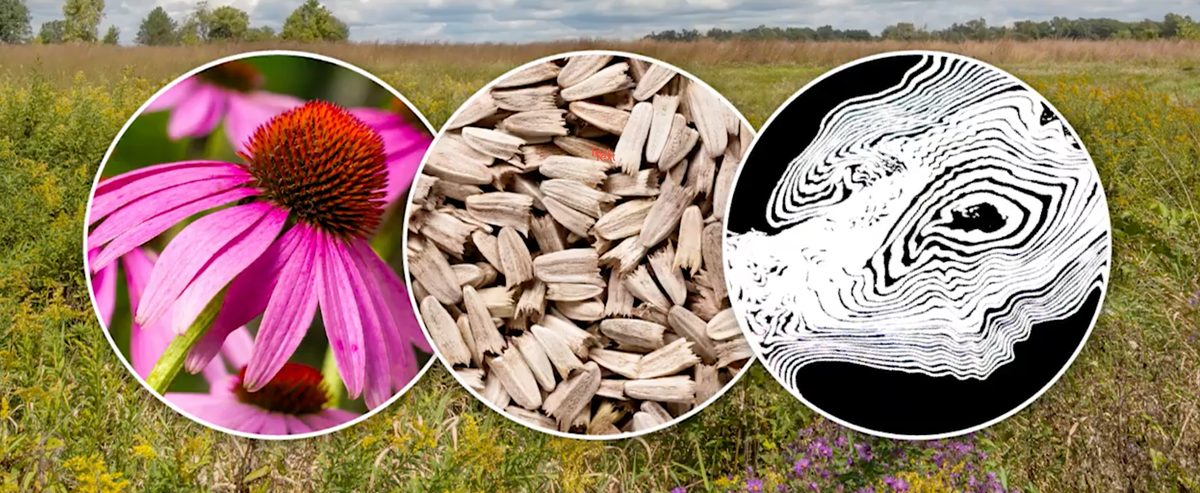
“In the beginning was the seed, and the seed made sound, and if you were to listen carefully you might say that it sounds like love.” – Cadine Navarro
This article is the first in a 2-part series on the power and practice of embodied listening, written with Cadine Navarro, an artist, urban designer, and friend. Over the course of this series we’ll explore Cadine’s scientific and artistic practice with the sensing capacities of seeds, alongside my own evolving practice of deep listening, as elements of a shared cultural practice to reconnect with ourselves, others, and the vibrant local ecologies we’re each part of.
Preamble: How Listening Helps Us Perceive Our Interconnected Reality
Last fall I wrote about the power of sound to carry and communicate our emotions–to literally connect us with our hearts–and to affect change beyond what’s possible with facts, speeches, and demands.
Sound has great power, but its potency is moderated by our ability to listen. Put simply, there is no sound without listening.
Sound, Listening, and the element of Space all go together in Vedic Cosmology, where Space and Sound are considered among the more subtle elements of reality.
And Listening –the jnāna-indriya, or “organ of knowledge”– is what helps us perceive that reality in the first place.
If perceiving reality depends this much on listening, why does dominant culture pay it so little attention? Deep listening author and podcaster Oscar Trimboli notes that we spend 55% of our days listening on average, yet only 2% of people receive any listening training.
That gap isn’t incidental. The corporate and political elite, and their associated trillion-dollar marketing apparatus, have a strong interest in flooding our airwaves and algorithms. Doing so makes it hard to truly listen. This flow of distraction negates our internal intelligence, ability to sense, and ultimately our capacity to perceive Reality, paving the way for harm, extraction, and manipulation.
It follows, then, that there’s great–even liberatory–power in reclaiming and cultivating our ability to listen.
Listening, at its root, is to make a decision about paying attention. And who and what we pay attention to has vast repercussions for ourselves and our communities. As post-war experimental American composer Pauline Oliveros puts it, human values and “all cultures develop through ways of listening.”
How and whether we listen shapes our cultures. It does more than that, though: whole-body listening– as though our entire body was an ear and our bones the ossicles–connects us deeply to the vitality of our inner landscapes and our outer surroundings.
Listening affirms life by deepening our relationship with it.
This is true at the human and more-than-human scale, and leads me to the introduction of Cadine Navarro and the groundbreaking research that she co-authored with MIT professor Nicholas Makris, which traces the power of sensing to the very kernel of life–the seed.
The Science: How Seeds Sense–and Grow–From the Sound of Rain
In a recently published study in Scientific Reports, part of the Nature family of journals, Navarro and Makris describe how even seeds can sense and respond to sound– in this case, the sound of rain alone was enough to accelerate a seed’s growth. Put poetically, even seeds listen and respond.
To test the idea, Makris and Navarro carried out experiments with thousands of rice seeds, which naturally grow in shallow, wet fields. They placed the seeds sufficiently far away from the falling droplets so that only the sound waves would reach them, then varied the size and height of the droplets to mimic raindrops during light, moderate, and heavy rainstorms. To confirm the lab generated rain-induced acoustic vibrations matched their natural counterparts, they tested hydrophonic recordings of acoustic vibrations generated underwater and in wet soils in nature.
Finally, they calculated whether the vibrations of the droplets would be enough to jostle the seeds’ statoliths, or microscopic gravity-sensing organelles that signal where a seed’s roots and shoots should grow.
The team found that the sounds from raindrops and their subsequent reverberations were distinctive and strong enough to jostle the seed’s statoliths and thus impact germination in the seeds.
In fact, the kind of sound pressure experienced by seeds from the rain in water puddles or in the ground is so intense that it's been compared to standing within a few meters of a jet engine in the air!
The Art: It Sounds Like Love
 Bandcamp New & Notable Feb 1, 2026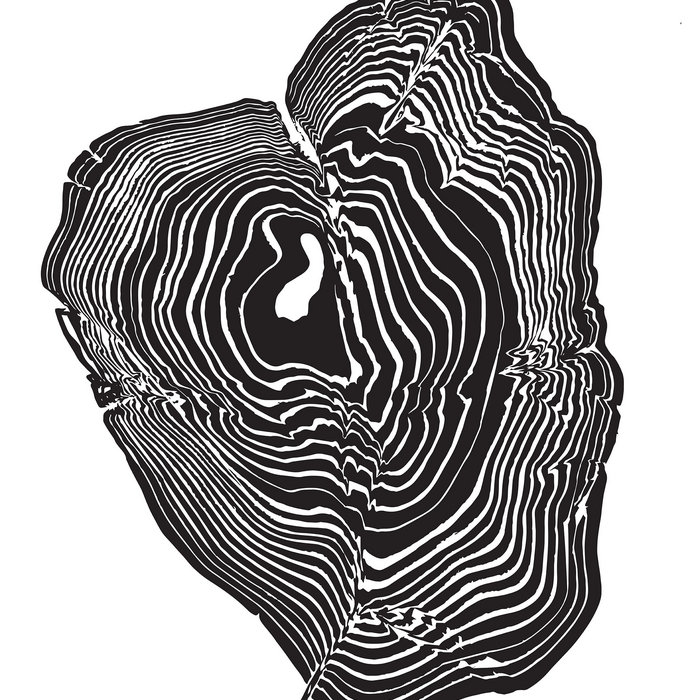
Seeds not only sense sound–they can also generate sound of their own, even if beyond typical human perception. To explore this idea, Cadine travelled to her mother’s home state of Ohio to record the quickly vanishing yet critical and ancient prairie landscapes. There she recorded the sound of nine native prairie seed species, in their dry, dormant state. In Cadine’s words:
I wanted to explore ways to reveal and share an embodied experience of the world alive with a sonic pulse and vibration. Growing up in Japan, I had been exposed at an early age to Shinto practices and a worldview that everything is alive with spirit and sonic vibration, and as such, has a right to be heard. Through the nexus of art and science, I set out to explore the literal side of this poetic metaphor. Recognizing that each (non-modified) seed not only contains the complete genetic code and life force needed to grow a plant adapted to its specific environment, I was curious to see just how seeds would respond to–or even produce–sound.
To enable others to appreciate the subtlety and beauty of seed sounds, Cadine also created images by modifying the ancient Japanese marbling technique known as Suminagashi, which she studied in Japan under one of the last masters of this age-old craft. This involved playing the sound of seeds over a basin of water and ink, and allowing the sound waves to move the ink into visual images depicting each seed.
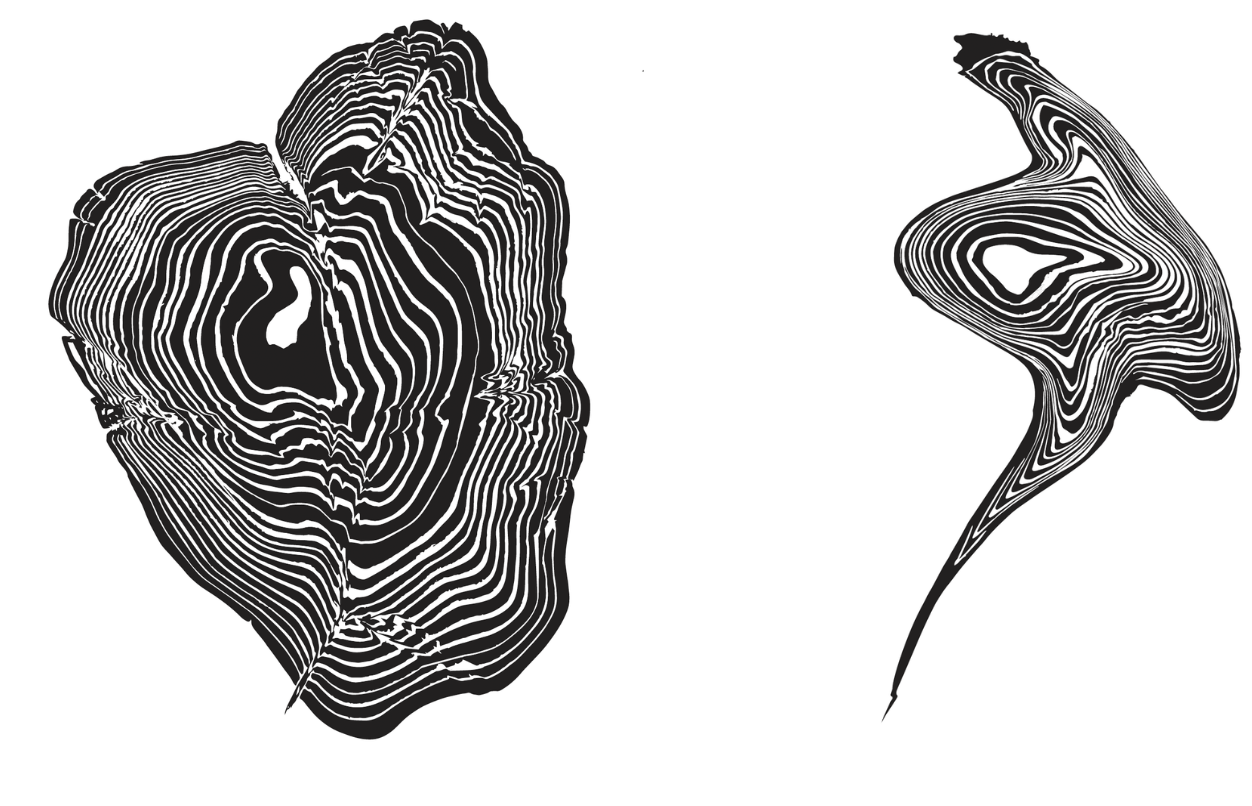
Engaging even more senses– beyond hearing and seeing–Cadine created a whole-body experience for people by laser-etching the seed images into architectural glass floor panels and exhibiting them in interactive museum settings across the globe.
In the words of biologist and author David George Haskell:
Bringing the subtle but vitally important vibratory energies of the world into human visual and somatic awareness is transformative… opening imagination and bringing us back home to the networks of relationships that are the substance and animators of life…. at a time when such connection is much needed.
Engaging with Cadine’s practice with seeds sparked my curiosity:
- What becomes possible when we open our sensegates to this level of subtlety?
- How much more fully would we participate with and care for life if we knew it was sensing and interacting with us, too?
The Return: Embodied Listening as the Pathway to Inter-Being
“You do not need to leave your room. Remain sitting at your table and listen. Do not even listen, simply wait, be quiet, still and solitary. The world will freely offer itself to you to be unmasked, it has no choice, it will roll in ecstasy at your feet.” – Franz Kafka
There are sounds in us and all around us, with signals for care and responsiveness.
Refining our attention to these sounds and sensations expands our ability to tune in to different levels of dissonance and resonance, and provides a lens for understanding how different environments, all the way down to the seed, are sensing and supporting life.
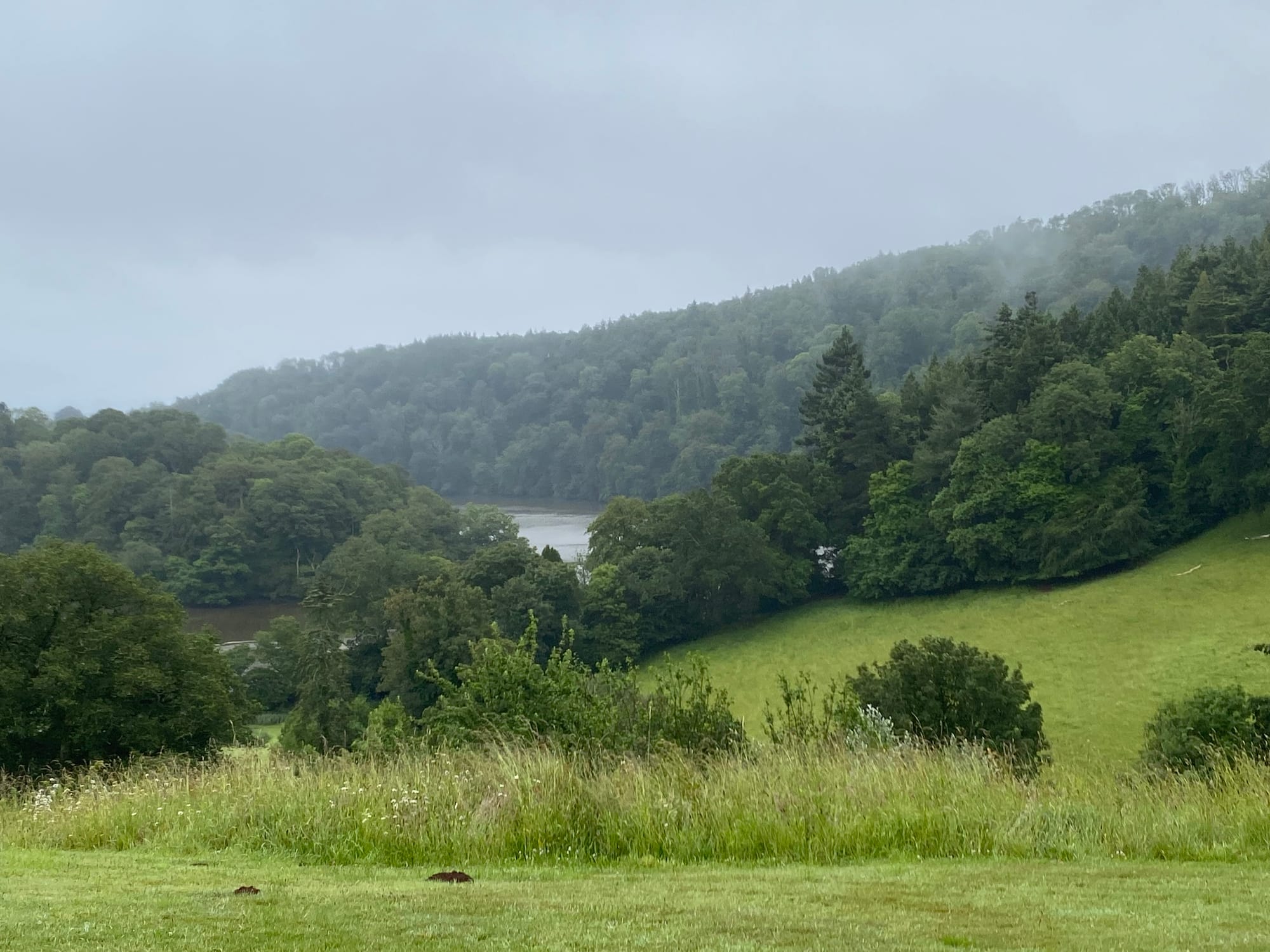
This summer I found myself in the vibrant hills of Devon abutting the River Dart where I was invited into an ecological listening practice by Emmanuel Vaughn-Lee, as part of an Emergence Magazine gathering. Lying down on the dew-covered grass, eyes closed, I attuned my breath with the sounds of a multi-phonic bird choir, periodically accentuated by the wind’s traversal through the forest leaves. I lost myself in their songs as the motion of sounds inhabited my porous body, and I gained a deeper sense of belonging–a felt expansion of my heart. In Cadine’s words, “it sounded like love.”
If the modern predicament projects The Story–or Illusion–of Separation, whereby we fortify ourselves with AirPods and algorithms, tuning out our surroundings, then embodied, deep listening might be the very vehicle that reconnects us to our innate interdependence or “Interbeing” in the words of Zen teacher Thich Nhat Hanh.
By intentionally engaging and directing our listening, we connect with ourselves, each other, and the places we are a part of, and in doing so, actively create living cultures rooted in relationality.
–
Stay tuned for Part II of this series, where we'll explore embodied listening's applications–from urban design to leadership–for how we live, act, and shape the world around us.
--
Listen:
- Ohio Prairie Composition by Cadine Navarro with courtesy to the prairie seeds (bandcamp)
- Suiren from album “Deep Listening” by Pauline Oliveros, Stuart Dempster, and Panaiotis (Spotify)
- Information National Forest – by Cicada Dream Band featuring Pauline Oliveros, Timothy Hill, and David Rothenberg (Spotify)
Read:
- Plants can sense the sound of rain, a new study finds (MIT news)
- Listening as Activism: The “Sonic Meditations” of Pauline Oliveros (New Yorker article)
- Sounds Wild and Broken by David George Haskell (book)
Experience:
- It Sounds Like Love - youtube video via cadinenavarro.com
- Sonic Meditations – Deep Listening Group Practices and Compositions by Pauline Oliveros (PDF)
- To Be Means to InterBe – youtube video with Thich Nhat Han